AMH · Property maintenance operations · Field research · 2024
AMH Turn Discovery — Greensboro
The application and the people using it
The Turn platform helped AMH teams coordinate work needed to get vacant homes ready to rent. The full process also depended on Primo for inspections, Work Orders for planning and assignment, Power BI for reporting, and phone, text and email for coordination.
- Field Managers
- Review and assign work, coordinate technicians and vendors, track progress, and review completed work and costs before closing the Turn.
- Turn Technicians
- Inspect properties, record issues and required repairs, carry out work, and capture updates and completion evidence in the field.
- Vendors and supporting teams
- External vendors complete assigned work. Data and training/support teams are relevant to reporting gaps and workarounds identified in the study.
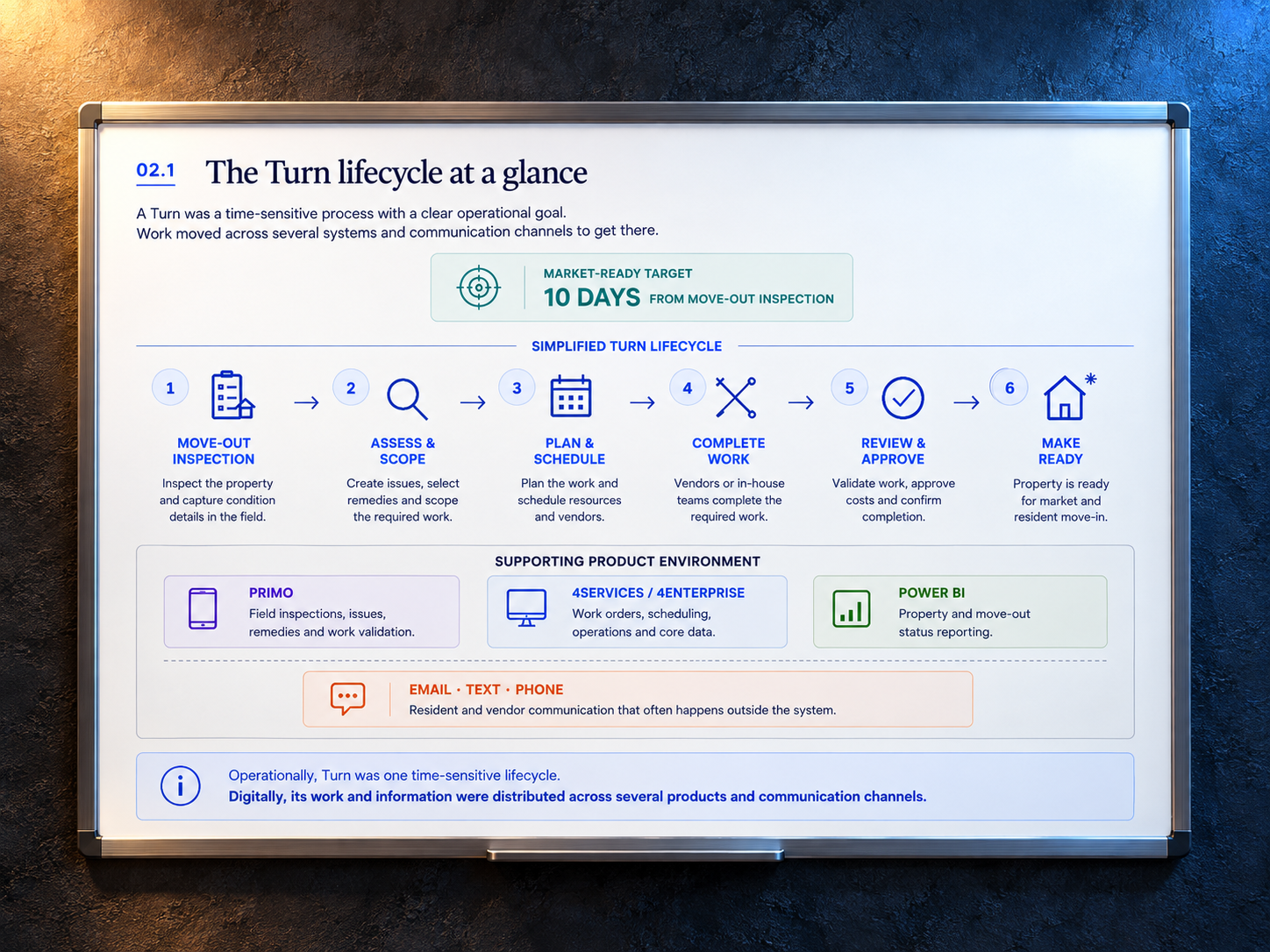
Follow the work from the property to the office
AMH aimed to return homes to market within 10 days of move-out inspection. That was the operational target the teams worked towards.
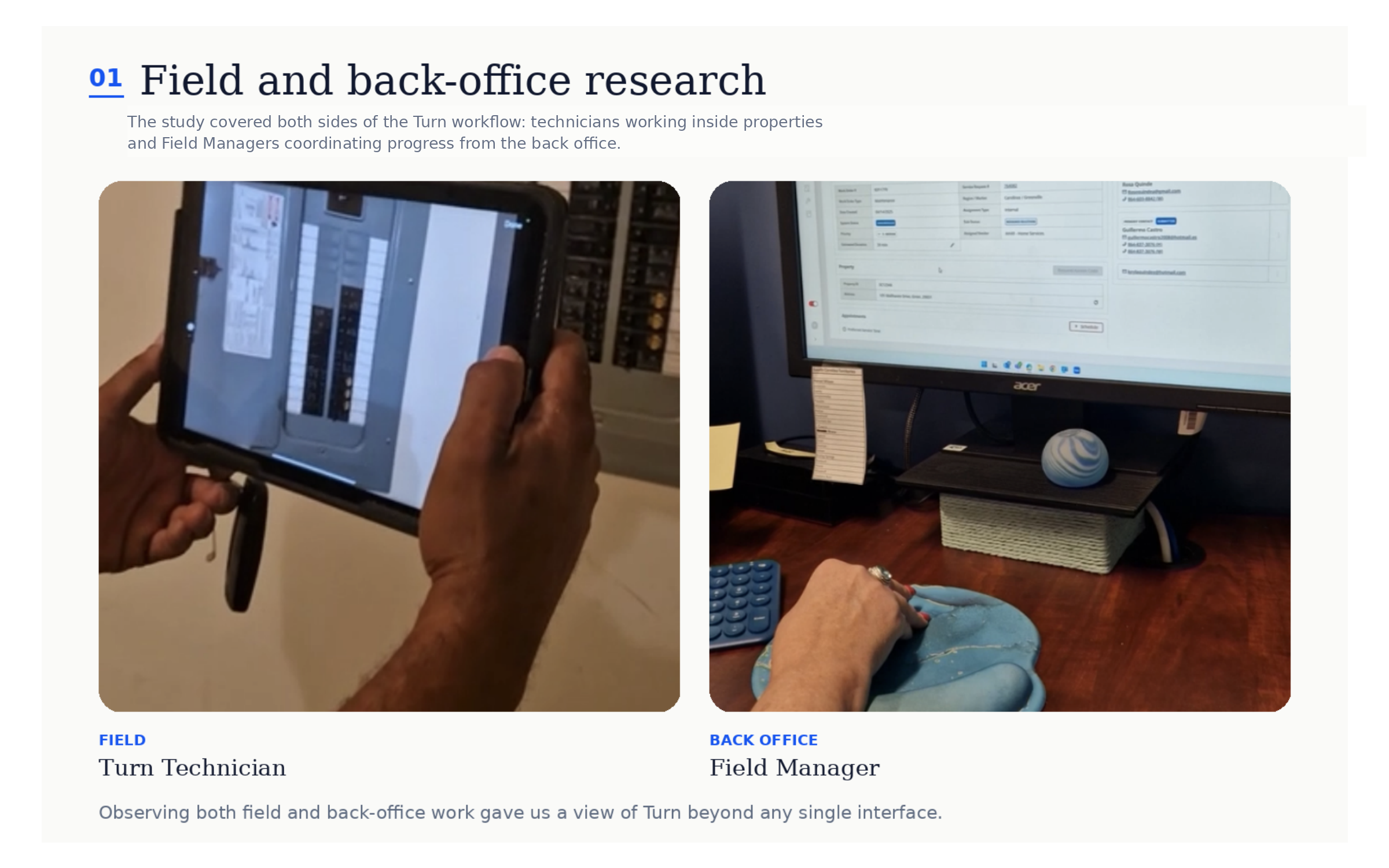
Within the four-day study, I spent two days on site observing two Turn Technicians in vacant properties and two Field Managers coordinating work from the back office. I traced the information, decisions and handoffs they needed to keep a Turn moving.
View research synthesis
Raw observations were grouped into recurring findings and candidate responses.

What the fieldwork revealed
The findings exposed three kinds of breakdown: information missing at the point of decision, work the product did not fully account for, and context lost between systems. Each called for a different response.
Useful information was hard to reach
A preferred visit time existed on the Work Order but was hidden behind hover during scheduling.
Recommendation: surface it at the point of actionThe role extended beyond the model
Parts runs, lockbox work and connectivity constraints were underrepresented in the technician journey.
Recommendation: design around the fuller journeyManagers reconstructed progress
Inspection detail and vendor updates did not travel consistently through the operational tools.
Recommendation: investigate the handoffs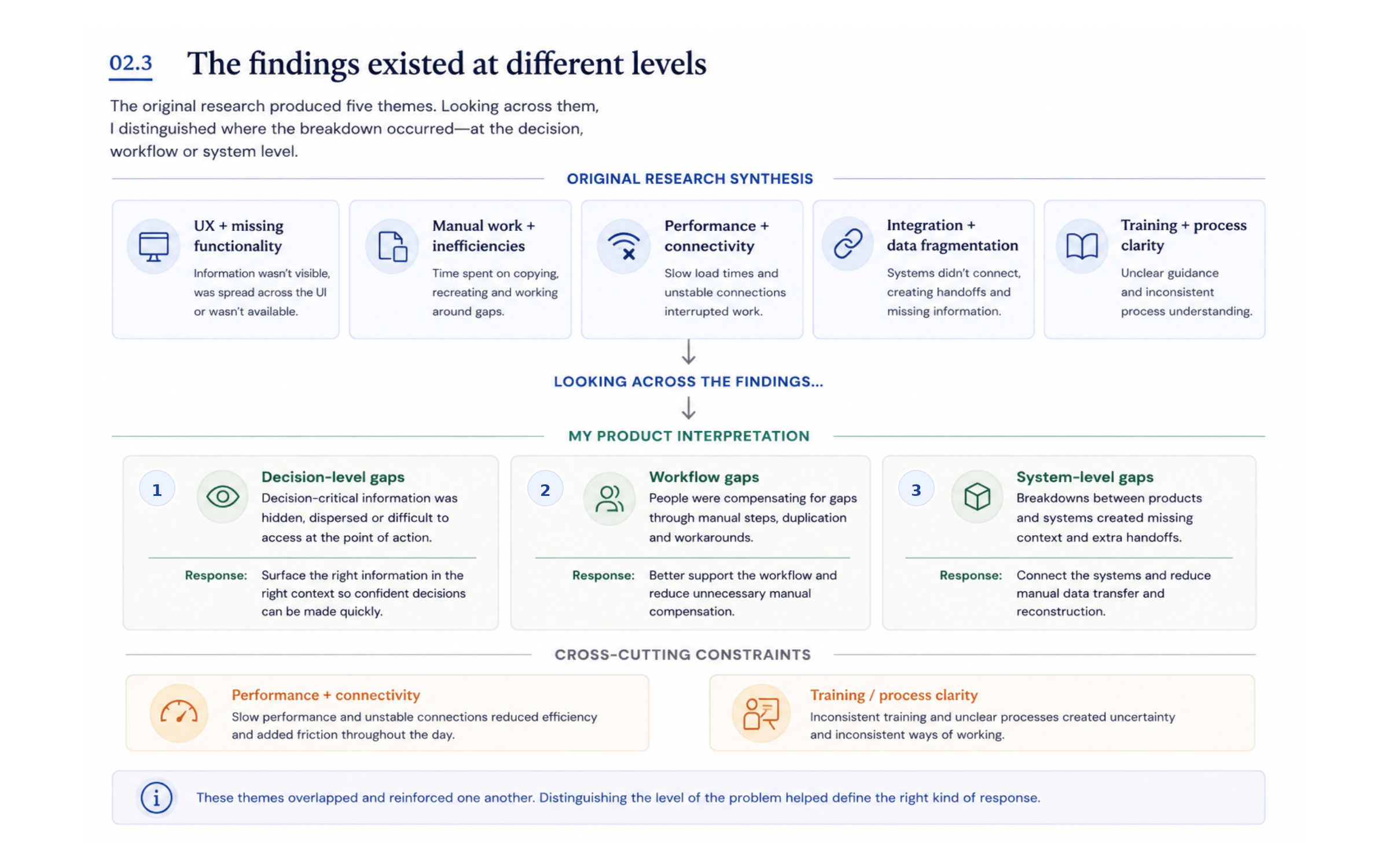
The same user friction could call for a UI change, a workflow redesign, or broader technical and organisational investigation.
From field evidence to recommendations
These examples show how observations shaped the next step, from a specific interface change to questions that needed wider investigation.
Decision level
One decision required context from several tools.
A Field Manager had one operational decision, but the context needed to make it confidently could sit across Work Orders, Power BI, Primo and external communication.
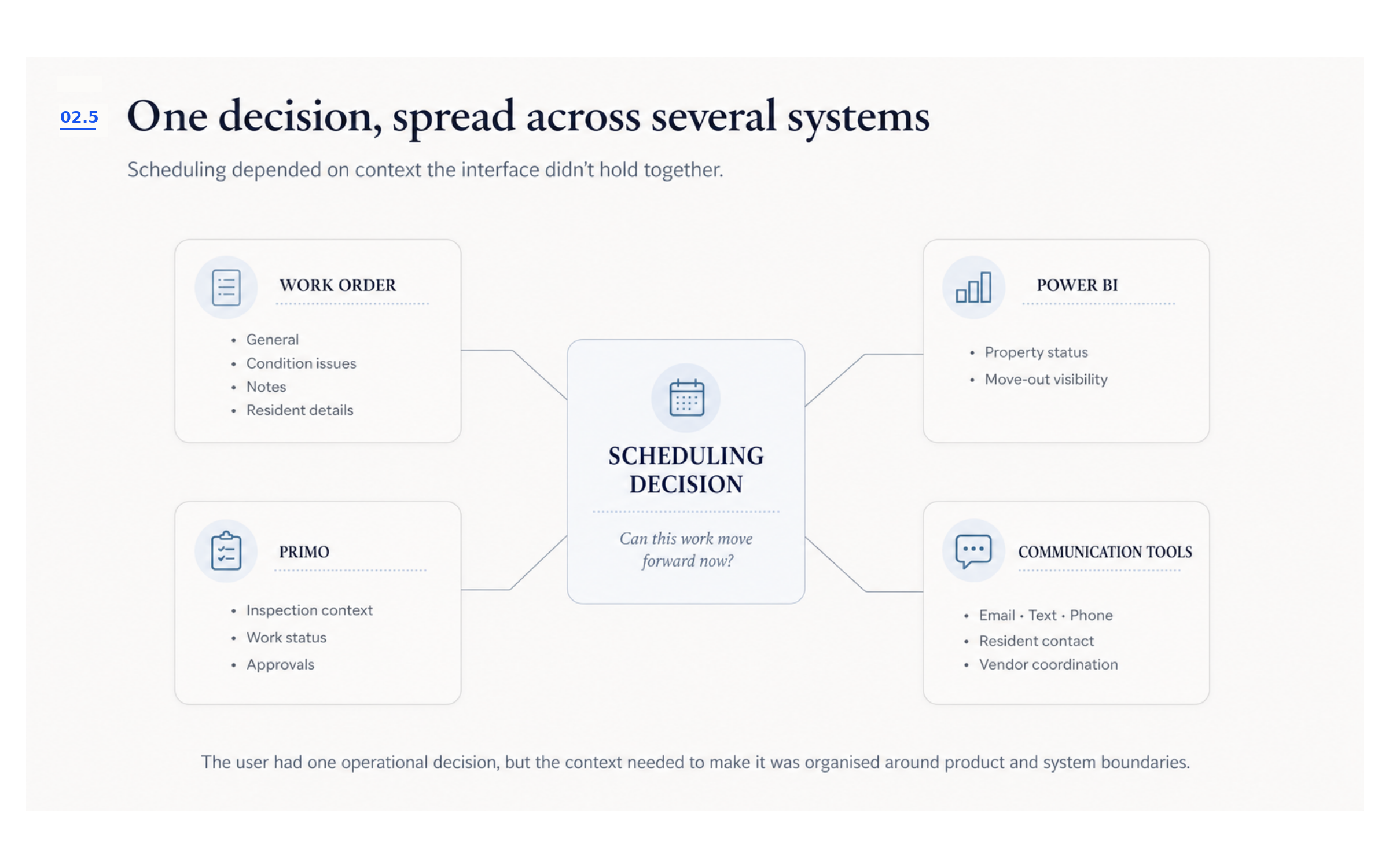
One tangible example: the resident's preferred visit time already existed on the Work Order, but was hidden behind hover while scheduling.
Recommendation: surface the preferred day and time directly at the point of action. This gave the next design phase a specific change to explore within the broader Work Order experience.
Handoff: noted for later design.
Workflow level
The technician journey needed to account for more of the job.
Field observation exposed underrepresented parts of the role: connectivity constraints, lockbox work, parts runs, additional systems and self-performed Work Orders.
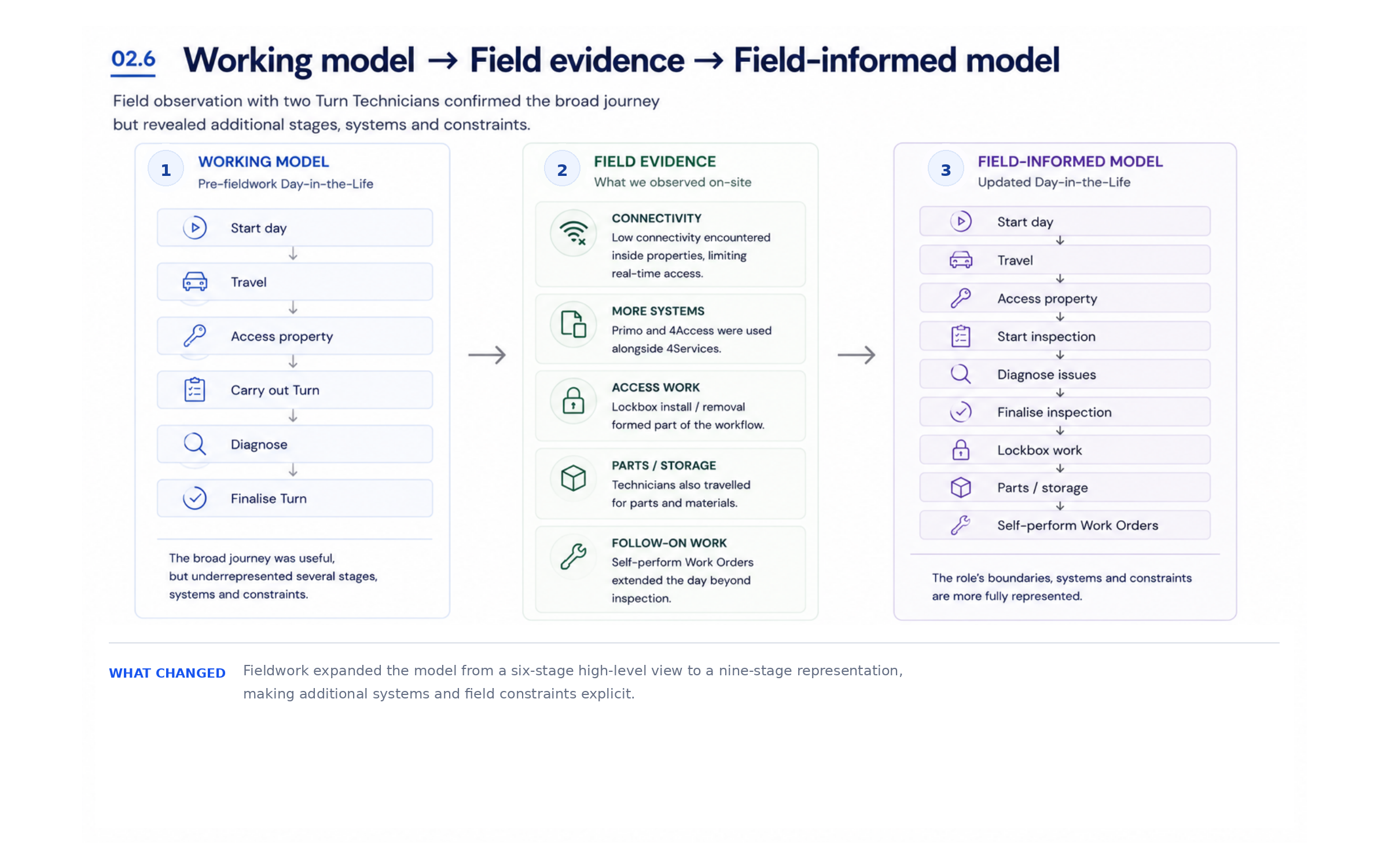
Recommendation: use the expanded journey to investigate recurring work and task types before defining product behaviour. Explore how the tools should support work in properties with poor connectivity.
Handoff: a field-informed model for further product design, with connectivity and synchronisation identified for technical investigation.
System level
Information lost continuity between teams and tools.
The end-to-end map showed where inspection detail weakened downstream, coordination left the core products, and Field Managers had to reconstruct overall Turn state.
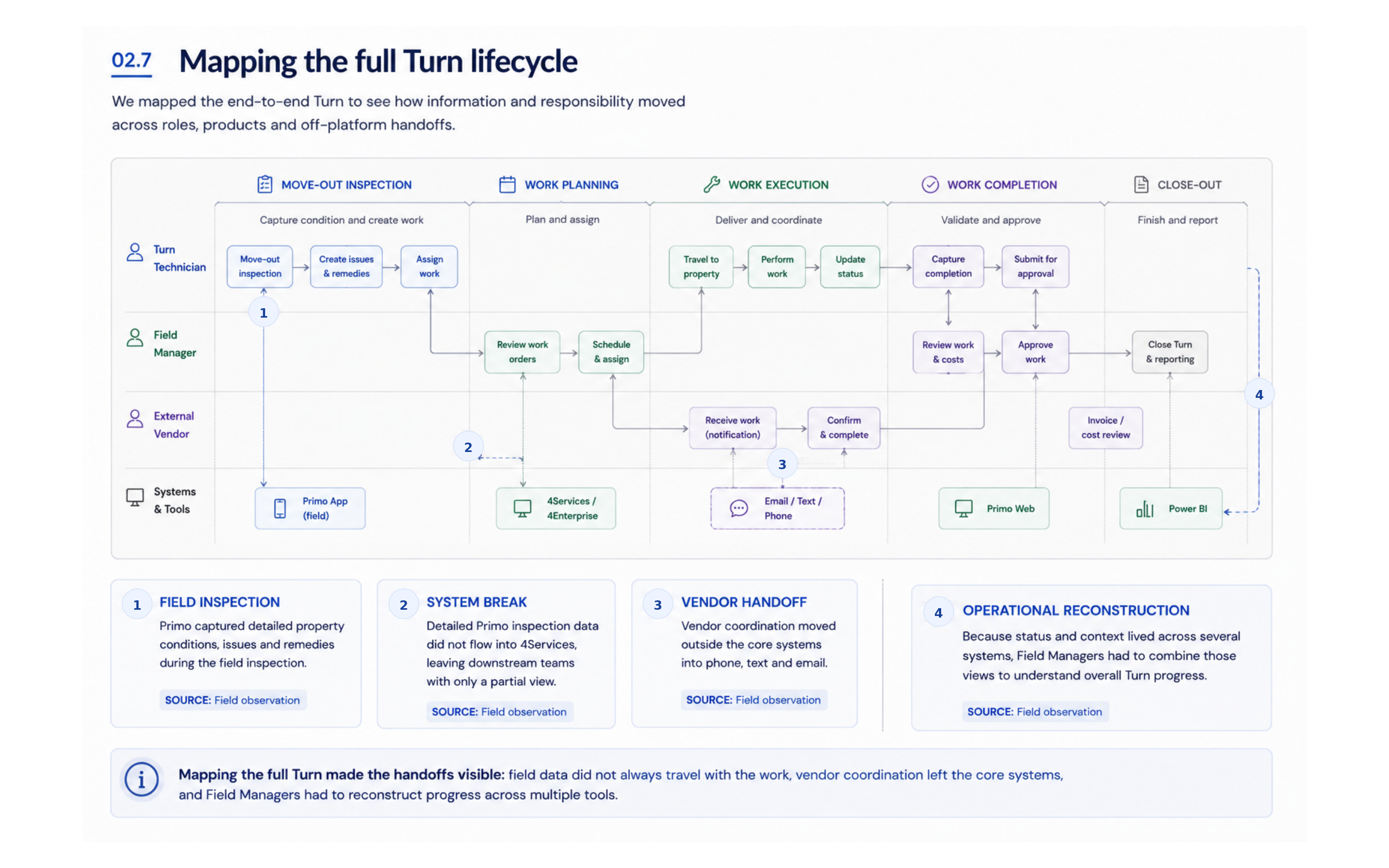
Recommendation: investigate how Primo inspection detail could connect to the core operational platform, how vendor activity could stay visible, and where the Field Manager workflow could be consolidated.
Handoff: the lifecycle map identified the breaks for wider product, technical and operational investigation.
The lifecycle crossed product boundaries more often than the user's task did.
A prioritised direction for the next team
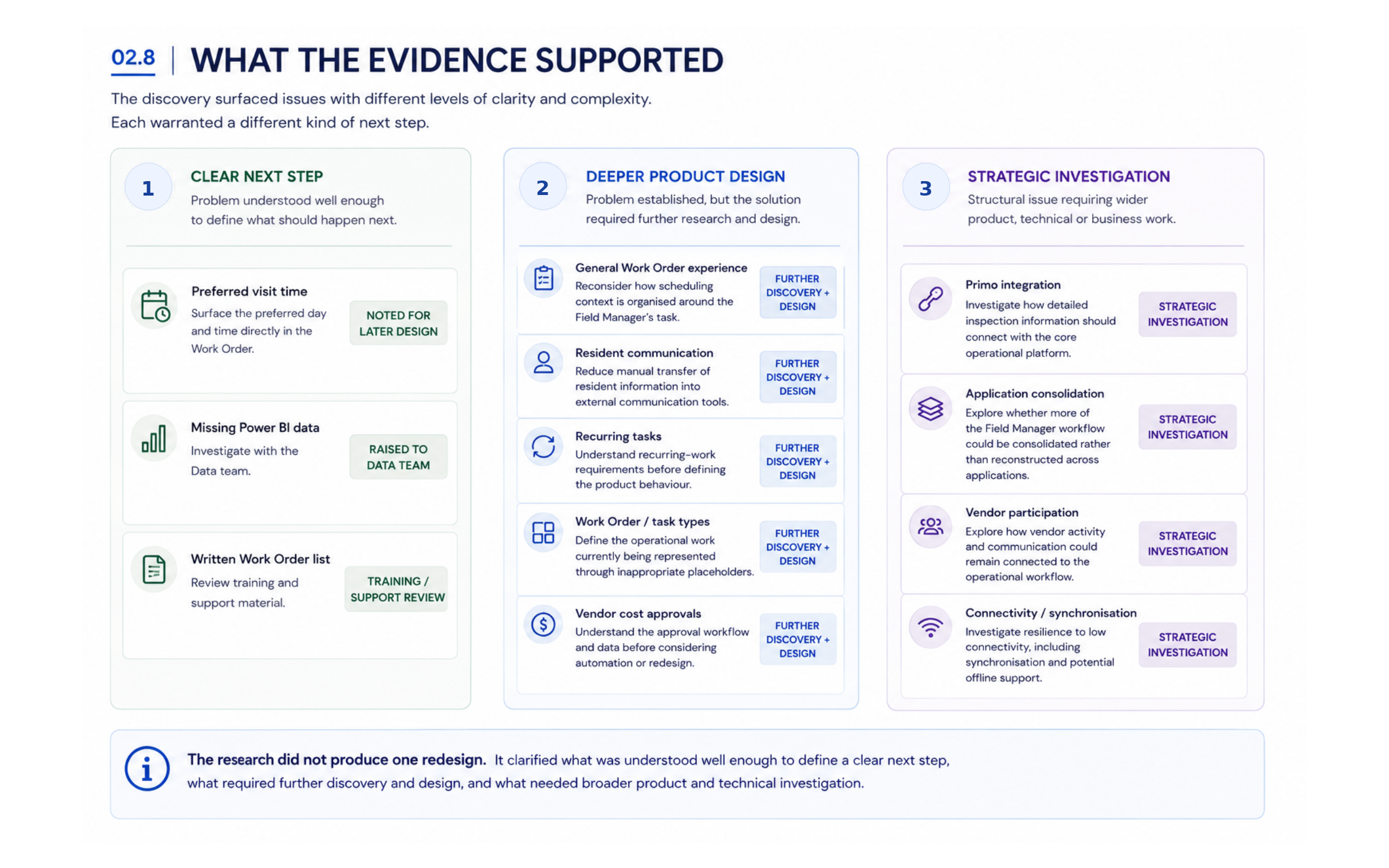
The handoff brought together field observations, the expanded technician journey, the lifecycle map and recommendations grouped by readiness to act.
Clear next steps included surfacing preferred visit times, raising missing Power BI data with the Data team, and reviewing training around written Work Order lists. Further product design covered workflow and task requirements. Strategic investigation covered integration, vendor participation and connectivity.
Outcome
The outcome was a prioritised, evidence-backed direction ready for the next team: which problems had a clear next action, which needed design exploration, and which required wider technical or operational work. The maps connected those recommendations to the work observed in the field.
What the next phase needed to establish
- Reach of the findings
- The Greensboro study involved two Turn Technicians and two Field Managers. Similar themes in earlier Orlando research supported further investigation, but this sample alone could not establish how widespread each issue was across markets.
- Implementation and impact
- This case study covers the research handoff. The preferred visit-time change was carried forward for later design and was not implemented during my involvement. The outcome reported here is the research and recommendations, with implementation impact still to be established.
- Recommended follow-through
- Validate the priority findings in other markets, test proposed workflow changes with technicians and Field Managers, and assess integration and connectivity options with technical teams. Agree baseline measures before assessing the effect of any changes.
Following the whole Turn made it possible to show where the next team could act, and what they needed to learn first.