Administrator / Review an agent’s queue
Who needs support?
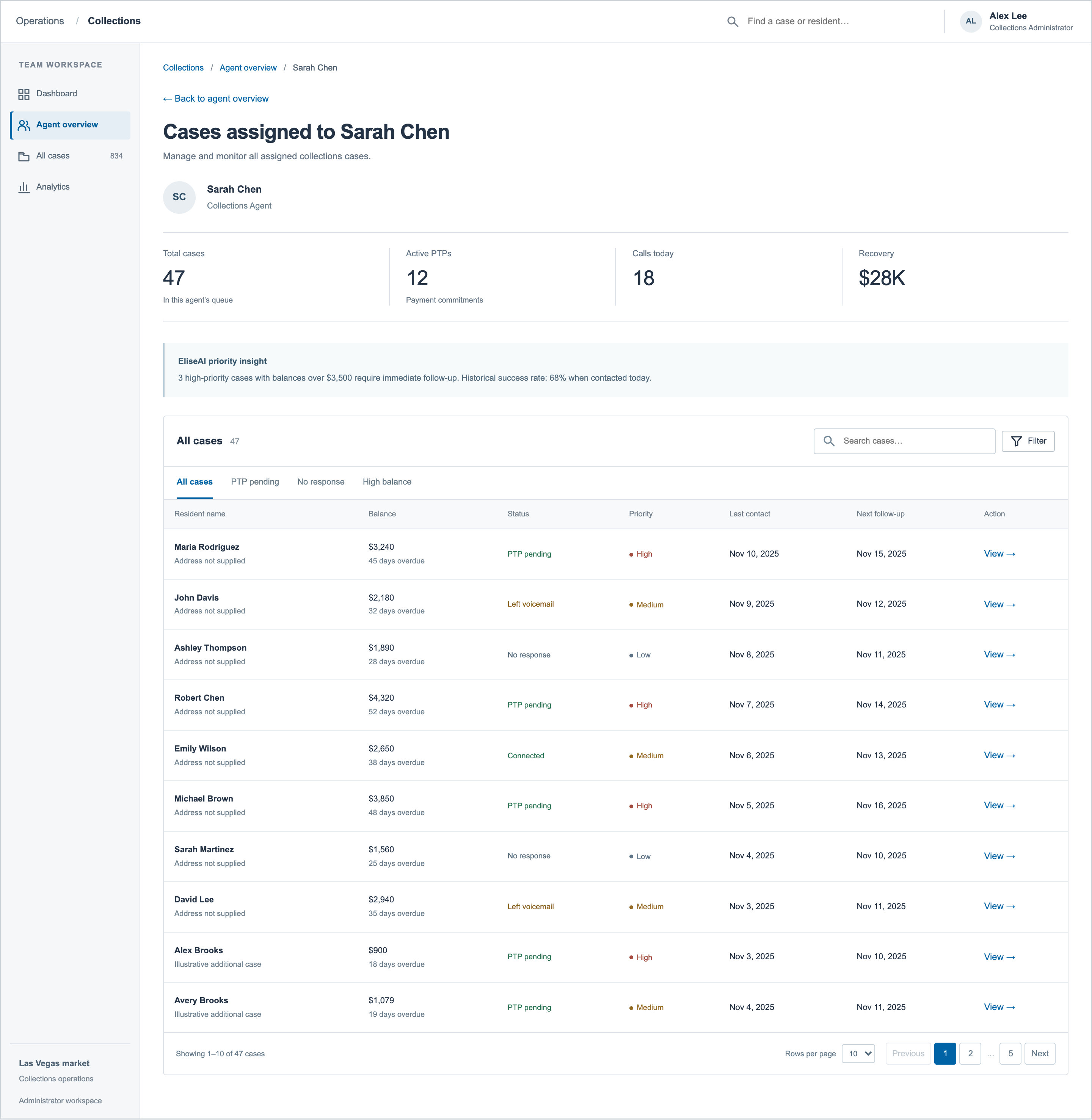 Inspect administrator view ↗
AMH · Collections workflows · 2025
The short story · 4 minI designed a proposed workspace around the account, not the systems behind it.
AMH’s collections agents help resolve unpaid balances after residents move out. Before making contact, they needed to reconcile the current balance, previous conversations and payment commitments across tools.
See the central design decision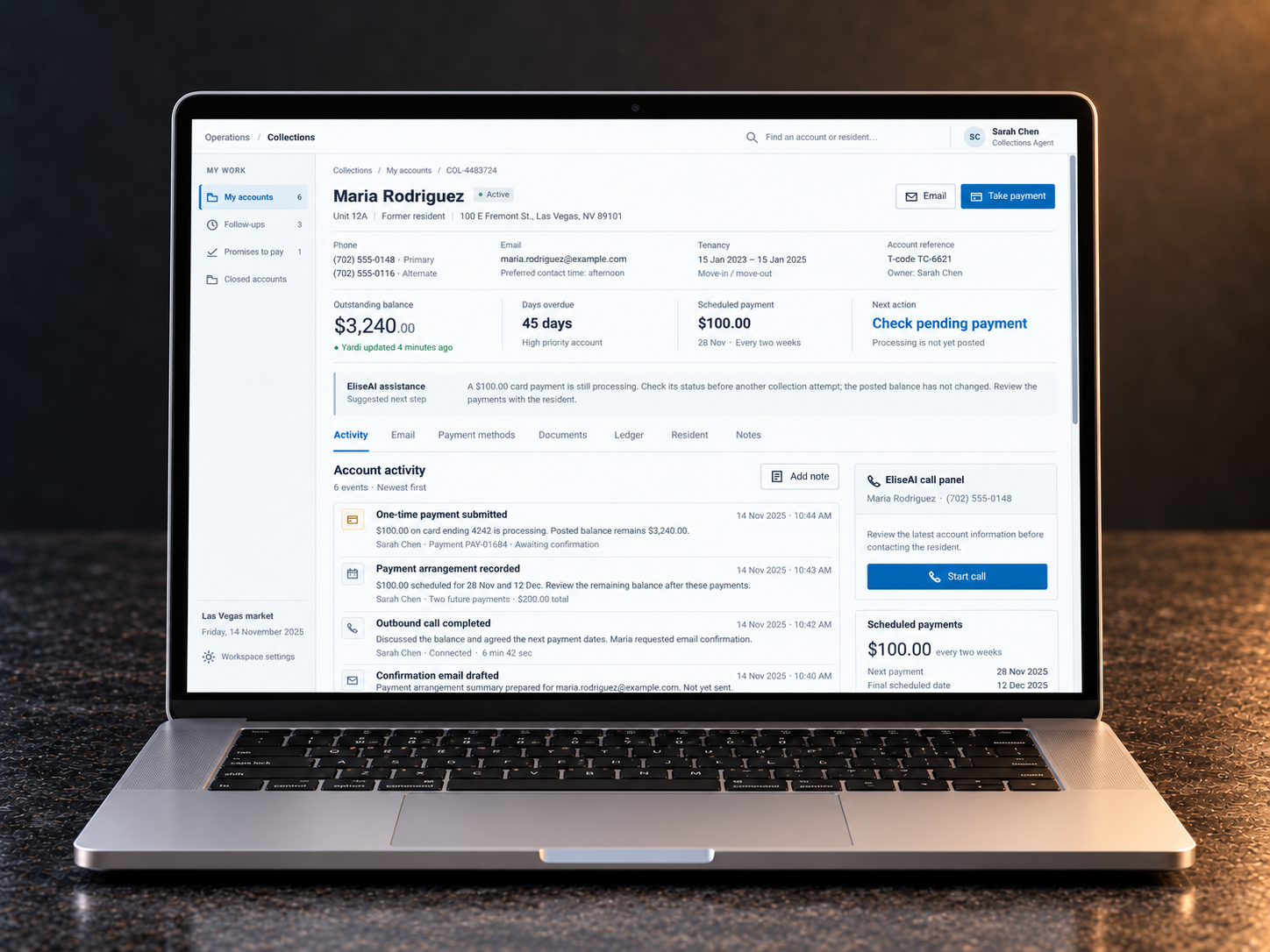
Screens refined from my original wireframes for this case study. Account data is illustrative; the proposed integrations were not validated production capabilities.
01 / The central design move
CRM already held account records and communication activity. Agents still returned to Yardi for current financial context and worked with replies in Outlook. The opportunity was to bring the relevant history, commitments and next action into a clearer collections view.
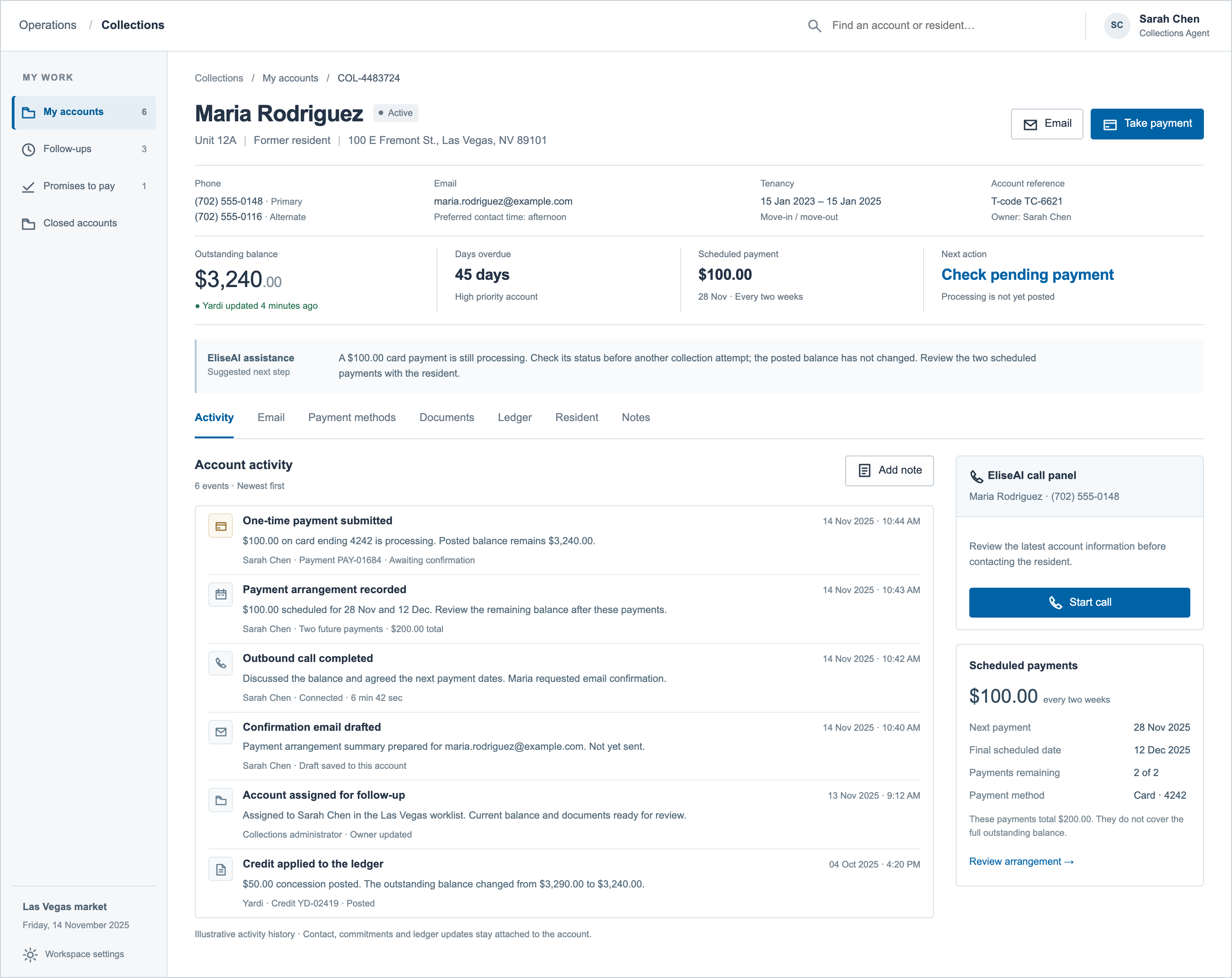 Inspect the account
Is the balance current?An update time makes freshness visible. Reliable data still depends on the integration.
What has already happened?Contact, commitments and balance updates share a chronological account history.
What does the arrangement cover?Scheduled payments stay distinct from the full balance and from money already posted.
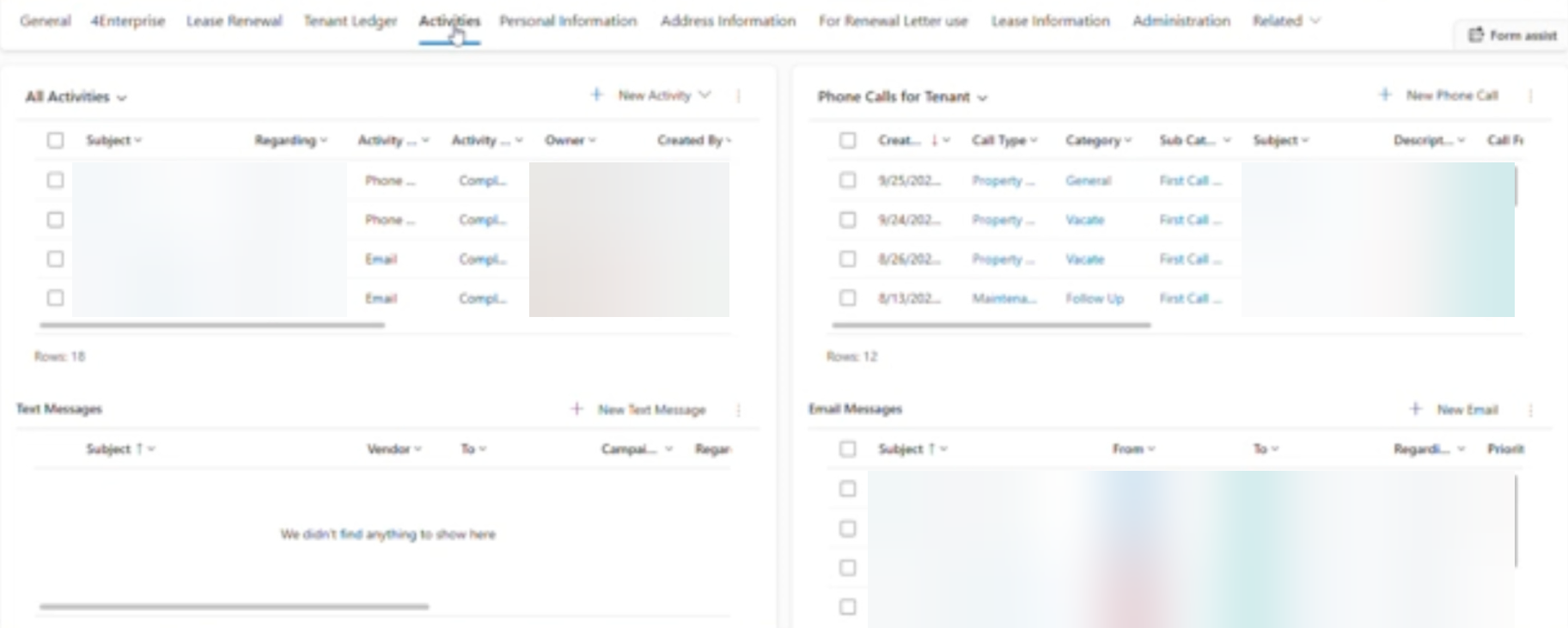 Inspect legacy view ↗
The legacy view presented activity in tables and channel-specific panels. The proposal brings the sequence of events alongside the payment arrangement and next action.
Different accounts are shown. This compares the visible views, not every capability of the CRM.
02 / Design around the responsibility
Administrators needed to allocate accounts and monitor the team’s workload. Agents needed the detail to prepare for contact and follow up. I organised the proposed workspace around those different responsibilities, keeping both views connected to the same account.
Administrator / Review an agent’s queue
Inspect administrator view ↗Agent / Work through assigned accounts
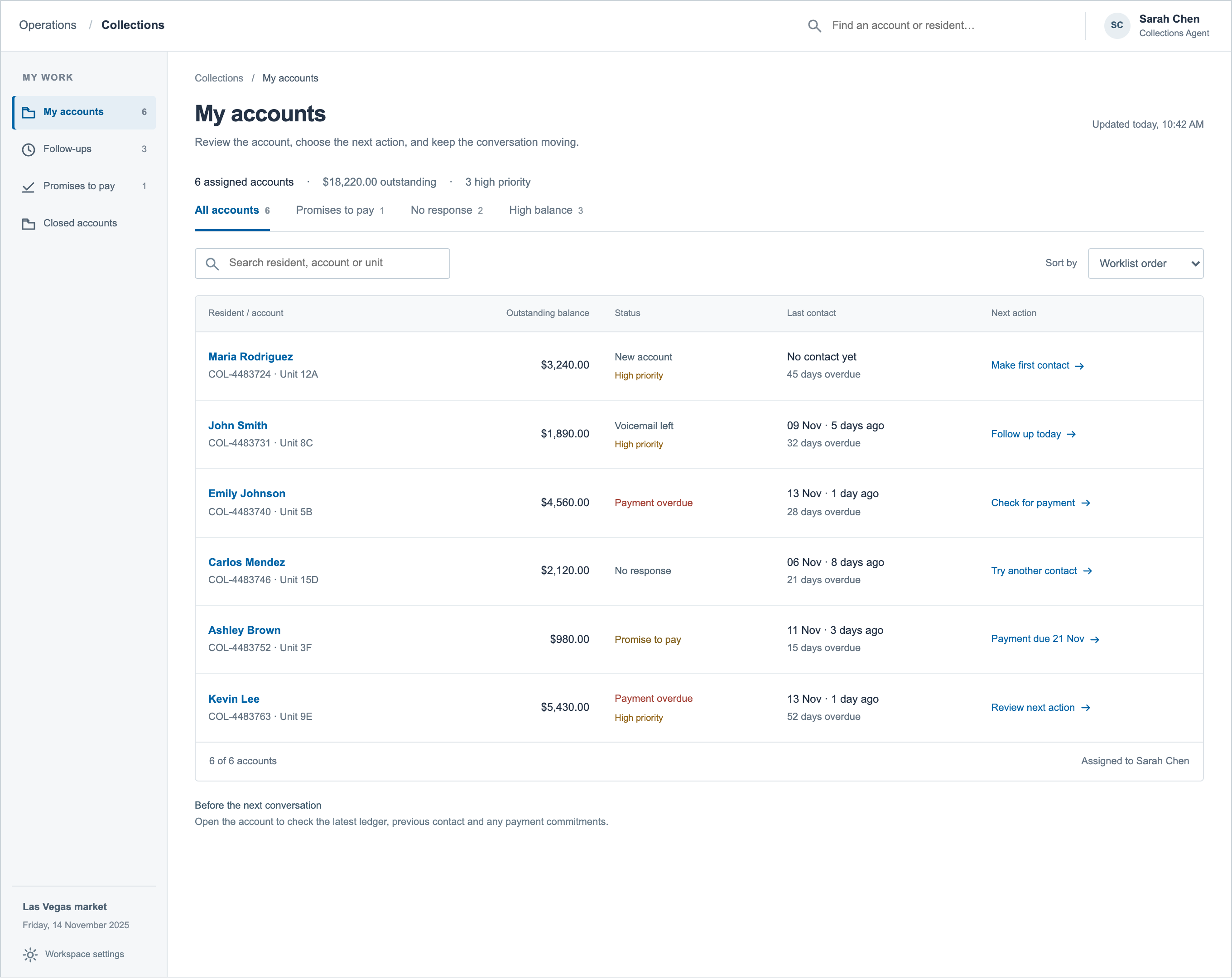 Inspect agent worklist ↗
Separate illustrative views, not matching live snapshots: the administrator example has 47 cases; the agent example shows six. My contribution was the organisation of the experience, not the invention of these roles or AMH’s existing promise-to-pay process.
03 / What the evidence changed
The Product Owner established the CRM–Yardi consolidation direction and led the interview with a Collections Administrator. I reviewed the recording, grouped the pain points and mapped both roles’ journeys. That synthesis shaped three priorities:
Balances could change after allocation, sending agents back to Yardi to check the account.
Design responseBring the current balance, update time and supporting context into the account.
Replies stayed in Outlook, activity was re-entered, and the birthday field doubled as a reminder.
Design responseKeep contact history, existing payment commitments and the next action together.
Administrators managed the caseload; agents needed detail to prepare, contact and follow up.
Design responseOrganise one account model into two role-specific views.
Miro / Research synthesis
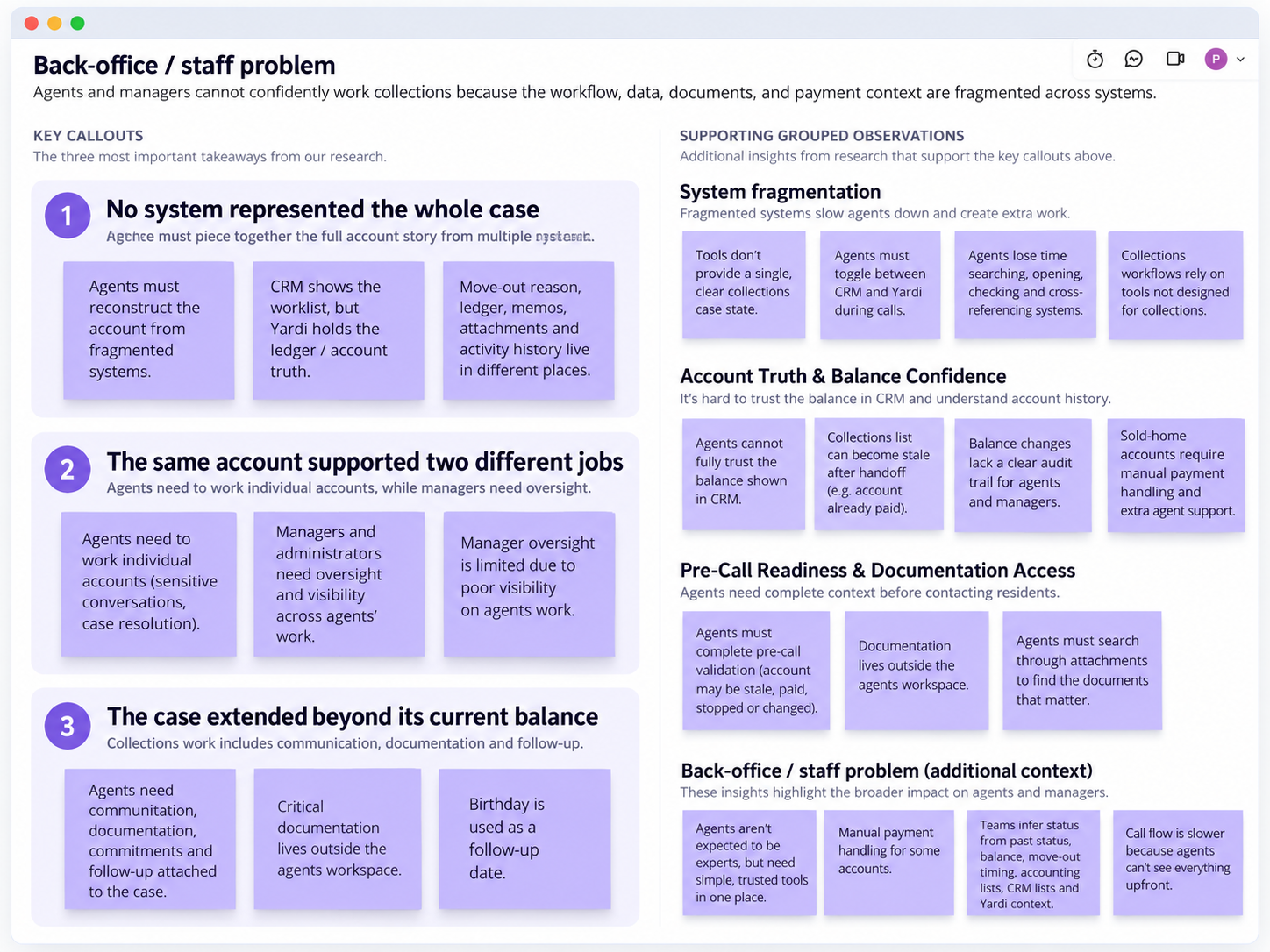 Inspect synthesis board ↗
Journey maps / Evidence to proposed flows
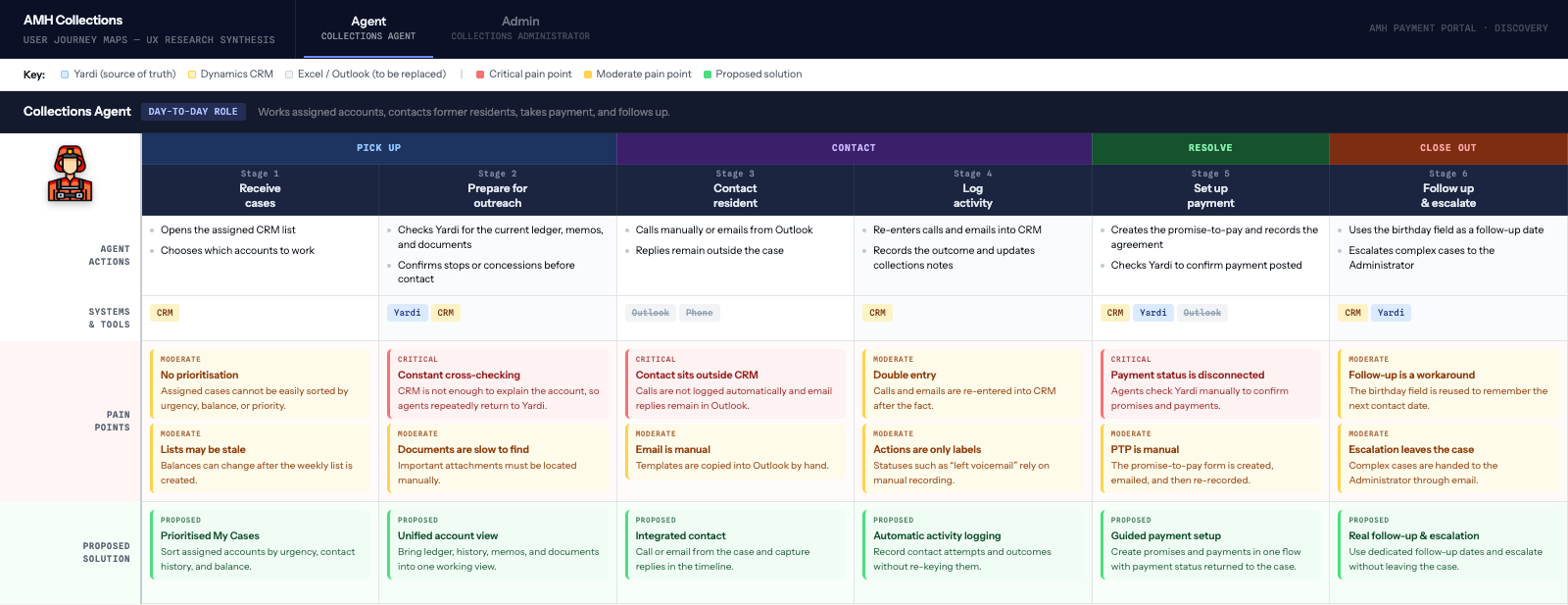 Inspect agent journey ↗
These were design priorities, not measured improvements. Usability and integration feasibility remained to be validated.
04 / What I delivered
In one week, I turned the existing brief into research synthesis, role-based workflows and wireframes, with rationale for AMH’s internal designer to continue the work.
The collections lead supported the overall direction and clarified where payment actions should retain agent involvement.
The next conversation
In an interview, I can take you further into the work:
How the interview synthesis became an account model and two role-based journeys.
How balance freshness, contact history and payment commitments shaped the workspace.
How I organised existing workflows for administrators and agents, and what remained to validate.